
Gymshark
Gymshark grew revenue by 148%. Its profit fell 85%. Now Ben Francis is borrowing money to buy back the stake he sold.
7/21/20266 min read
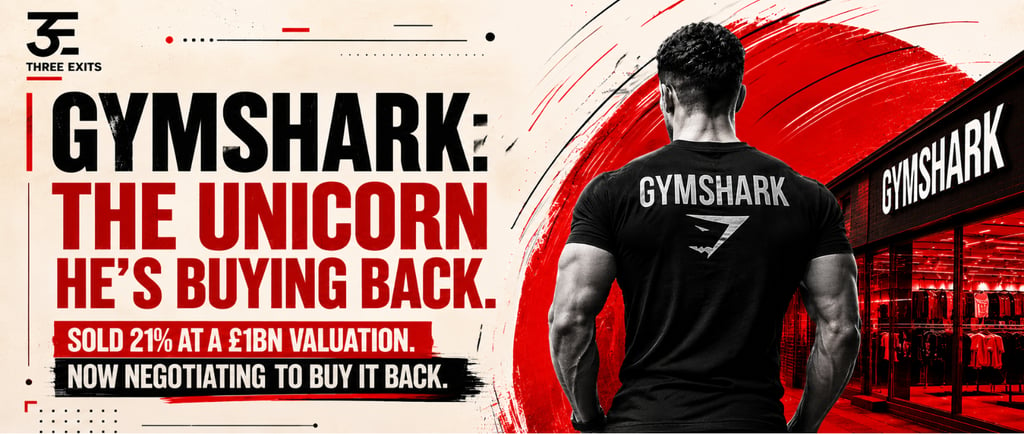
Gymshark grew revenue by 148%.
Its profit fell 85%.
Now Ben Francis is borrowing money to buy back the stake he sold.
____________________
THE SETUP
Gymshark now sells more clothing than almost any fashion brand in Britain. Its reported profit has fallen 85% in four years.
Fast facts:
August 2020: Francis sells 21% of Gymshark to General Atlantic at a valuation over £1bn.
Revenue: £260m (FY2020) to £646m (FY2025). Thirteen straight years of growth.
Pre-tax profit: £45.4m (FY2021) down to £7m (FY2025), a fall of about 85% from its peak.
Adjusted EBITDA in FY2025 hit £53.3m, £46.3m above the £7m reported as pre-tax profit.
July 2026: Francis is in talks to buy back part of the stake he sold, partly financed with bank debt.
Revenue up 148% since the deal. Profit down 85% since its peak. Same five years.
The 2020 deal priced Gymshark against pre-tax profit of about £30m the year before the sale. Profit didn't fall straight away. It rose to £45.4m the following year, when Francis returned as CEO, before reversing hard to £7m by FY2025.
It isn't publicly known how much of General Atlantic's £200m became working capital inside Gymshark versus a payment to Francis and other shareholders for the shares GA bought.
Five years on, Francis is negotiating to buy back part of the stake sold against that number.
Is Gymshark failing? That's not proven.
Gymshark hasn't posted a loss. Revenue has grown for thirteen straight years and adjusted EBITDA is bigger than it has ever been.
The real question is: has the profit growth General Atlantic predicted five years ago actually shown up and does the current buyback make that bet look better or worse.
Reports say part of the repurchase would be funded with bank debt, borrowed against a business whose reported profit has fallen for four straight years running.
____________________
THE PLAYBOOK
1. A valuation priced off future profit
At the time of the deal, Gymshark had £260m in revenue and about £30m in pre-tax profit. General Atlantic paid £200m for 21%, implying a valuation over £1bn: close to four times revenue and about 33 times that year's profit.
Thirty three times earnings isn't fanciful on its own. High multiples get justified by future growth all the time.
The real question is whether Gymshark's profit today supports the price paid then and pre-tax profit is the fairest test available.
It's the number the board reports every year, the number that would fund a dividend and the number a buyer applies a multiple to when a stake like this changes hands again.
Judged on EBITDA instead, the case is closer but still short. Apparel and DTC brands typically trade in a broad range of 10 to 15 times EBITDA.
At FY2025's £53.3m, that puts Gymshark's value between £530m and £800m, under the £1bn General Atlantic paid. Only at a generous 20 times does EBITDA get close to the original number.
Francis banked that £1bn valuation in 2020. Five years of spending on stores, staff and warehouses may explain much of the gap between EBITDA and pre-tax profit. It doesn't change the fact that the bet behind the price, that profit would climb fast enough to justify it, hasn't paid off yet on the numbers Gymshark itself publishes.
____________________
Takeaway: The £1bn price wasn't for the profit Gymshark had. It was for the profit it hadn't made yet. Revenue growth doesn't pay that off. Profit does.
____________________
2. Lead with the number that isn't shrinking
Whichever multiple is fair, Gymshark doesn't lead its results with the number that would settle it.
In FY2025 the gap between adjusted EBITDA and pre-tax profit was £46.3m, more than six times what the company actually reported as profit. The results announcement leads with revenue and EBITDA. Pre-tax profit gets mentioned further down.
Admin costs rose from £142m to £391m between FY2021 and FY2025, up 175%. Revenue grew about 48% over the same period.
Five years of new stores and warehouses cost money and that cost gets spread over several years rather than hitting all at once. Some of it is one-off costs, restructuring, opening new stores, adding new warehouses, that Gymshark strips out every year to calculate the adjusted figure.
None of that makes adjusted EBITDA dishonest. It's a standard measure and Gymshark reports it alongside pre-tax profit rather than instead of it. But a cost that still gets added back in year five isn't really an exception any more. It's just the cost of running the strategy.
____________________
Takeaway: If a company reports EBITDA and pre-tax profit and only talks about one of them, read the one they're not talking about first. That's the number that tells you what's actually happening.
____________________
3. Sell a minority stake, keep a minority's worth of certainty
General Atlantic's 21% came with more than shares. It came with a board seat and the standard protections an investor takes when they buy into a private company, the right to block certain decisions, the right to keep their ownership share if new shares get issued, the right to be bought out on the same terms if Francis ever sells the rest.
A board seat and information rights give an investor visibility public accounts don't: management accounts, monthly numbers, the figures behind the headline results, before they're public.
Buying back the stake removes that visibility along with the shareholding. If Francis wants to run the next phase of Gymshark without an outside board member reviewing the numbers first, the buyback buys that as much as it buys the equity.
General Atlantic's own stated rationale in 2020 was Gymshark's social community and the loyalty it drove. That's also the asset hardest to protect.
Several of Gymshark's former ambassadors have since built competing brands using the same playbook GA backed. There's no public evidence GA dictated the store rollout or the hiring. Francis could have made every one of those calls himself.
____________________
Takeaway: A 21% stake doesn't just buy shares. It usually buys a board seat and the right to see the numbers before anyone else does. When Gymshark buys that stake back, it's not only buying out an investor. It's also ending an arrangement where an outsider got to check the business from the inside.
____________________
WHAT PEOPLE MISS
There's an alternative version of this story than the one implied above.
Gymshark may have done exactly what it set out to do: trade near term profit for a global, omnichannel brand. The buyback could be Francis buying confidence, not correcting a mistake. Nothing in the public record rules that out.
What's harder to dispute is the maths in play one. General Atlantic priced Gymshark against a profit line that has since fallen from £45.4m to £7m. Current EBITDA would need a multiple few apparel brands reach to make the original price look right today.
Buying back the stake is also a governance decision. It trades capital that could go into stores, stock or marketing for control of a board seat and a reporting relationship that has shaped the business since 2020.
The number that would settle the rest of it has not been published: the repurchase price.
A premium to 2020 says the bet is still alive. A discount confirms what the pre-tax numbers already suggest. Even then, a partial buyback gets shaped by liquidity and negotiated rights as much as by performance.
The lesson travels beyond Gymshark. Any founder handed a valuation like this should know exactly what number it's betting on, long before an investor comes back asking for the receipt.
£646m in revenue bought Gymshark scale. It hasn't yet bought the £7m answer General Atlantic is waiting on and the bank debt now funding part of the buyback only shortens how long Francis has to find it.
____________________
THE PAPER TRAIL
Gymshark’s 13th Year of Growth: Ben Francis Statement
1 minute read
A short LinkedIn explainer summarising FY25 as “another profitable year” with £646m in sales and £53.3m EBITDA and explicitly presenting the lower £7m pre‑tax profit as a deliberate consequence of “massive strategic investment in physical retail” and “reinvesting 100% of profits”. It hands you the language of healthy cash, strong margins and “laying foundations” that you can set against the reality of an 85% profit collapse.
____________________
“Gymshark Didn’t Build a Community, They Rented One” – LinkedIn Rant
1 minute read
A brand strategist dissects Gymshark’s “midlife crisis,” arguing the company never owned its influencer community, just rented it on social and now finds itself competing with ex‑ambassadors who built their own brands, a perfect external voice for the “influencer flywheel turned competitor factory” theme.
____________________
Class Action Targets Gymshark’s “Army of Fitness Influencers”
7 minute read
A legal commentary piece on the 2026 class action that describes Gymshark’s “army of fitness influencers” and explains how the claim goes after the contracts — non‑competes and alleged instructions not to disclose sponsorships — giving you vivid language for the moment the community‑first growth engine crosses into alleged deception.
____________________
“General Atlantic Nears Investment in $1.3 Billion Gymshark Brand” – Pre‑Deal Gossip
4 minute read
Markets gossip from 2020 as GA closes in on the stake purchase, full of unnamed sources and breathless references to a “$1.3 billion garage brand”, ideal texture for the set‑up chapter where the unicorn narrative is being sold long before anyone sees what it does to the P&L.
https://www.bloomberg.com/news/articles/2020-08-13/general-atlantic-nears-investment-in-1-3-billion-gymshark-brand
____________________